
Last updated:
Yongin Korean Folk Village, located in Yongin, Gyeonggi-do, is a living museum that brings history to life. The largest of its kind, it preserves Korea’s rich culture and offers fun, hands-on experiences. The best aspect of the village lies in its significant contribution to representing the Joseon Dynasty. It has relocated and restored 270 authentic houses, offering a glimpse into the Joseon era. Guided tours are available for $65 to $140, while the entrance fee is around $25. First-time visitors should spend at least 4 to 5 hours here. Let’s dive more into this historic attraction in today’s guide.
- Yongin Korean Folk Village At A Glance
- About the Yongin Korean Folk Village
- How to Get to the Korean Folk Village from Seoul
- Best Things to Do in the Yongin Korean Folk Village
- Best Time to Visit the Yongin Korean Folk Village
- Who Should Visit The Korean Folk Village?
- Korean Folk Village vs Bukchon Hanok Village: Which One Is Better?
- Visit Everland Nearby
- Pair Your Trip With Suwon Hwaseong Fortress
- Some useful tips for visiting the Yongin Korean Folk Village
- FAQs
Yongin Korean Folk Village At A Glance
| Established | October 3, 1974 |
| Address: | 90 Minsokchon-ro, Giheung-gu, Yongin-si, Gyeonggi-do | 경기도 용인시 기흥구 민속촌로 90 |
| Opening Hours: | Mon-Tue: 10:00 – 19:00, Wed-Sun: 10:00 – 22:00 |
| Nearest Station: | Gangnam Station (line 2/Sinbundang line, exit 5), Bus no.5001 |
| Admission | Adult/Adolescent 37,000 won ($24.46) | Child 30,000 won ($19.83) | Senior/Disabled 26,000 won ($17.19) (all pricing includes rides at the village’s amusement attractions) |
| Time Needed | 4-5 hours |
| Official Website | www.koreanfolk.co.kr |
| Tel: | +82-31-288-0000 |
| Nearest Attraction | Everland |
About the Yongin Korean Folk Village
Yongin’s Korean Folk Village is the largest in South Korea, sprawling across 245 acres of picturesque landscape framed by mountains and rivers. It’s a journey back to the Joseon era, with 270 authentic houses relocated and restored from different parts of the country. You can experience old customs, performances, crafts, and food here.
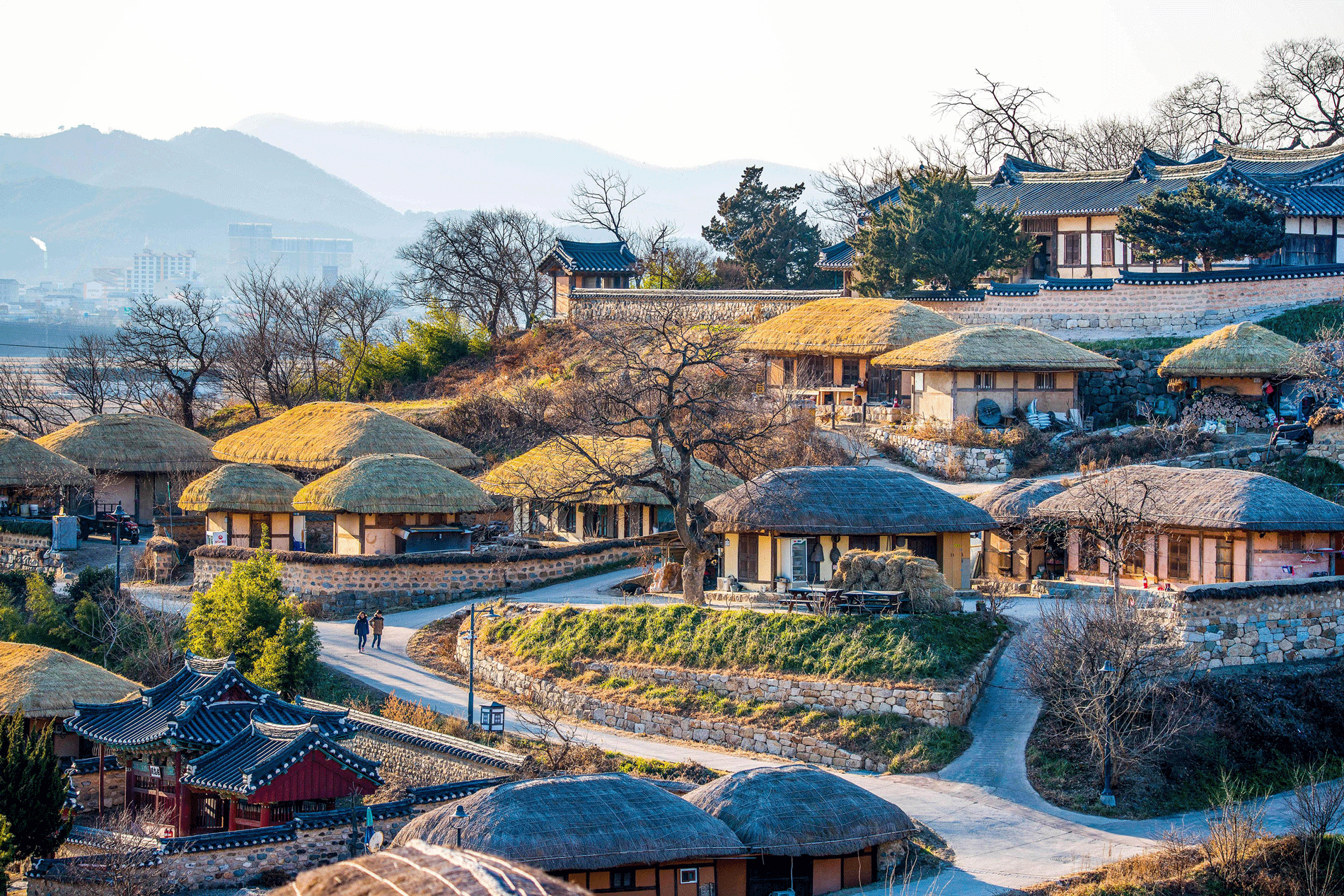
The village feels truly authentic, with real houses moved and restored to show what daily life was like during the Joseon Dynasty. From large hanoks of noble families to small homes of common people, the village shows the different styles of traditional Korean architecture.
It’s no surprise that many historical dramas and movies, like My Love from the Star, Moon Embracing the Sun, and Dong Yi, were filmed here. It’s also a favorite spot for K-pop idols, like in episode 145 of Run BTS.
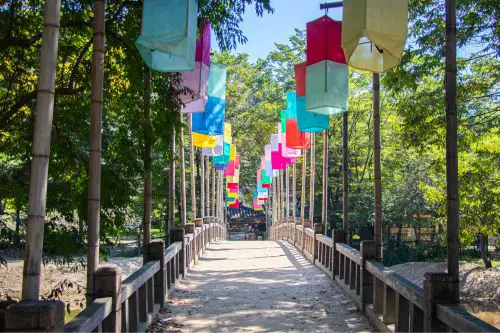
Yet, beyond its visual appeal, the Korean Folk Village is a vibrant hub of activity, offering many traditional performances, cultural showcases, and opportunities to engage in hands-on experiences. So, spending time here is not only fun but also educational.
Korean Folk Village History
The iconic Korean Folk Village was opened on October 3, 1974, as the first open-air museum in South Korea. It aimed to preserve traditional folk culture and customs through Korean architecture, clothing, and food. Between 1979 and 1990, the village relocated and restored many authentic houses across Korea. In the 1990s, it expanded into becoming an “edutainment park,” opening the Korean Folk Village Museum, the Traditional Folk Museum, a theme park, a family park, a youth hostel, and a convention center. Since 2000, the Korean Folk Village has continuously expanded and launched new exhibition halls, attractions, and experiences. Today, it features Joseon Dynasty houses, traditional workshops, exhibition halls showcasing folk culture, traditional performing arts, traditional food, ancient goods, a play zone, and many more tourist amenities.

How to Get to the Korean Folk Village from Seoul
You will have to combine train and bus rides to reach the Korean Folk Village from Seoul. Visitors typically travel to the Gangnam Station, then take a bus to the village. Myeongdong/Eujiro-1 Station is another go-to station.
By Public Transportation
From Myeongdong/Euljiro-1 Station (Line 2, Exit 6):
- Walk a short distance to the bus stop in front of the Stanford Hotel Myeongdong.
- You can catch bus number 4101, which will take a 45-minute ride to the Korean Folk Village.
- Upon reaching the Korean Folk Village stop, simply cross the road to the large car park and walk about 5 minutes to the village’s entrance.
From Gangnam Station (Line 2/Sinbundang Line, Exit 5) or Sinnonhyeon Station (Line 9/Sinbundang Line, Exit 7):
- You can take bus number 5001-1. The bus ride takes around 51 to 57 minutes, and you’ll also get off at 한국민속촌•보라효성해링턴•삼정아파트 (Korean Folk Village•Bora Hyoseong Harrington•Samjeong Apt.) stop.
- After alighting, cross the road to the large car park in front and walk towards the Korean Folk Village entrance on your right. It’s a 5-minute walk.
For departure from the Korean Folk Village:
Take the same bus (#4101/5001-1) from the bus stop across the road from where you previously alighted (the departing bus stop is on the same side as the Korean Folk Village, so no road crossing is required).
If you are worried about navigation, click here 👉 Best Apps to Use in Korea.
All-Inclusive Tours
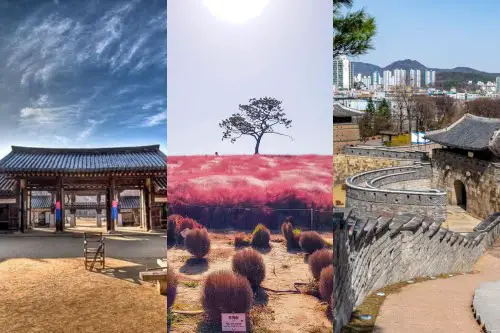
If public transportation feels too complicated, opting for an all-inclusive tour is a great solution. With these tours, you won’t need to worry about figuring out how to get back and forth. They typically include round-trip transport, admission tickets, and English or Chinese-speaking guides. Platforms like Klook, Viator, or GetYourGuide offer convenient booking options for such tours.
Best Things to Do in the Yongin Korean Folk Village
Check out museums and exhibitions
- Best For: Culture-seekers, families, visitors seeking a deeper context
- Time To Spend: 30 minutes to 1 hour
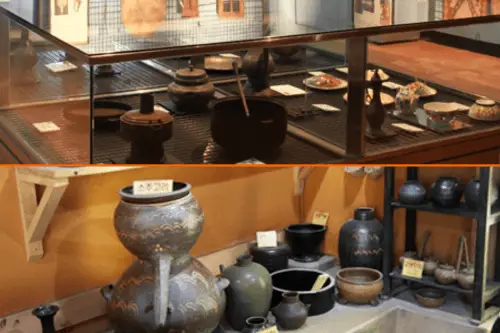
In addition to the charming traditional houses, the Yongin Korean Folk Village is home to several fascinating museums. One is the Korean Folk Museum, where you can see how farming families lived during the late Joseon period. There’s also an exhibition that displays masked dances with 30 cultural artifacts, while another showcases almost 3,000 earthenware artifacts. There are nine world folk exhibition halls with around 860 artifacts from different cultures worldwide.
Enjoy Cultural Performances
- Best For: Culture lovers, couples, families
- Time To Spend: 30 minutes to 1 hour
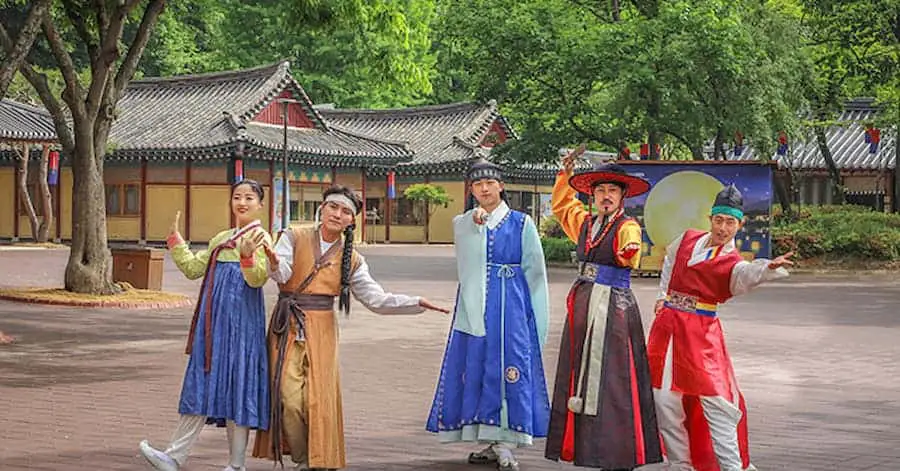
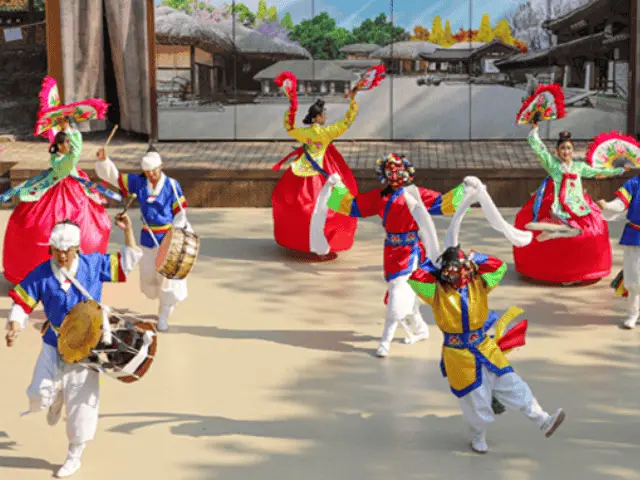
One big reason the Korean Folk Village is so popular is the people who dress up and perform traditional dances. In the Performance Area, you can see traditional shows like Nong-ak play, Tight rope play, Horseback martial arts play, and traditional wedding ceremonies. Traditional Korean music plays, and you can hear the sounds of traditional instruments.
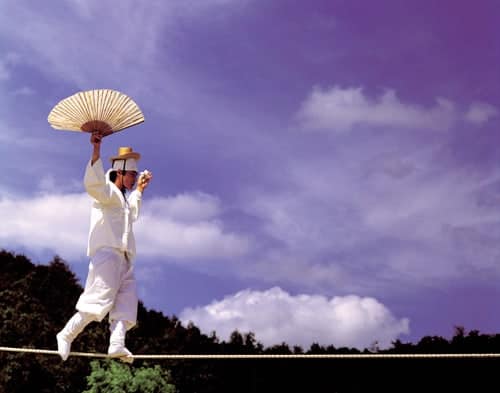
Shows start at 10:00 and happen every hour until 16:00. Each one highlights a different traditional instrument or dance, so it’s worth catching them all. Remember, the schedule might change because of the weather, so check the information board when you visit.
If you want an even more cultural experience, check out the WanHyangRoo area for traditional Korean music, which will make your visit to the Korean Folk Village even more special.
Participate in various workshops
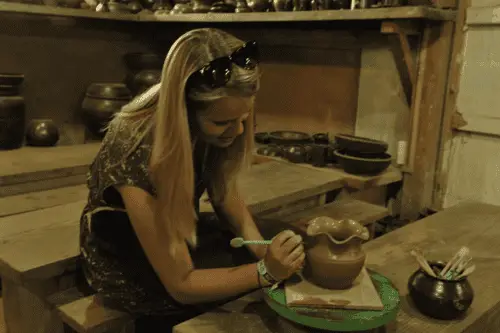
- Best For: Solo travelers, friends, visitors interested in hands-on activities
- Time To Spend: 20-40 minutes
Workshops are the highlight of the Korean Folk Village. They offer a unique opportunity to participate in hands-on experiences from the Joseon Dynasty era. Roll up your sleeves and try your hand at pottery, mask making, hanji lantern crafting, rope twisting, blacksmithing, and even crafting musical instruments or fans. It’s a unique way to experience history while having a blast!
Rent traditional costumes and immerse yourself in Joseon life
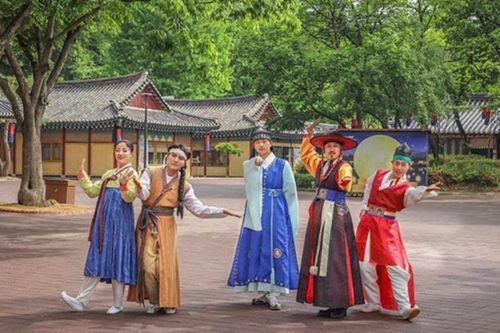
- Best For: Photography lovers, couples
- Rental Period: You can rent for a half or full day
At the Korean Folk Village, it feels like a journey back to the Joseon Dynasty. People stroll around in traditional attire, doing daily chores like cooking and roof repairs. Sometimes, they even host special events to resurrect ancient festivals. You can rent traditional outfits at Market Village and join the fun. Since the village is a popular filming location, you can dress up as your favorite movie characters and relive iconic scenes!
Try Horse Riding
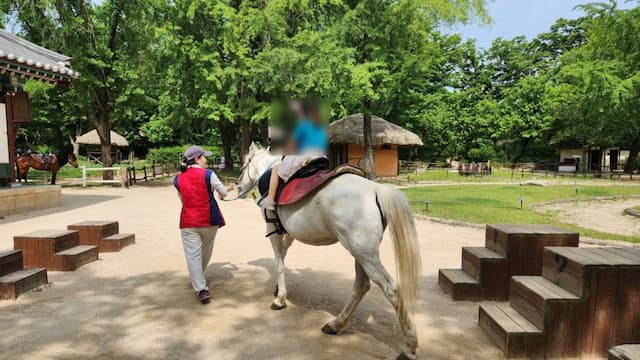
- Best For: Adventurers, visitors who enjoy horseback riding
- Time To Spend: 15-30 minutes
Horseback riding is another enjoyable activity you might want to try at the Folk Village. It adds an extra dash of excitement to your visit and is suitable for all ages. If you’re interested, you can find the horse rental spot right by the Performance Area. Just a heads up, though, there’s an extra fee for this activity.
Visit the Amusement Park
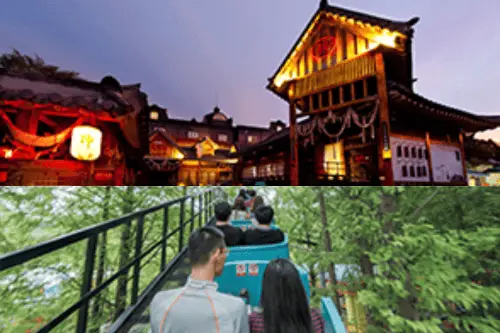
- Best For: Families with children, thrill-seekers
- Time To Spend: 1-2 hours
If you’re with your kid, you’ve got to check out this place. There are rides for both kids and adults of all sizes. You’ll find classics like carousels and bumper cars, perfect for a nostalgic thrill. But if you’re up for some excitement, rides like the Viking and Drop N Twist will get your heart racing.
For a family adventure, a coaster winds through the woods, giving you a nature-infused experience. And if you’re into spooky stuff, there’s a haunted section called “The Horror of Ghost Zone,” with ghost-themed attractions and haunted houses like the Haunted Prison and the Haunted Den.
The entrance ticket includes all the ride fees, but you’ll need to pay extra for the haunted houses.
Enjoy delicious food and drinks within the village

- Best For: Foodies, people who want to try authentic Korean dining
- Time To Spend: 2-3 hours
If you feel hungry or thirsty, stop by the dining spots at Yongin Korean Folk Village. They’ve got a variety of Korean dishes, street food, desserts, and cafes to satisfy your cravings.
In the Bazaar Area, you can try about 20 local favorites, such as naengmyeon, bibimbap, and handmade dumpling soup. All the food here uses natural flavors and traditional methods for an authentic taste. The Market Village also offers plenty of Korean restaurants.
For a cozy cafe experience, check out Darakbang near the entrance to the folk village in the Market Village. For take-out coffee or street food, you’ll find plenty of options at the kiosks in the Market Village. If you’re craving something more Western-inspired, the Amusement Village has you covered.
Best Time to Visit the Yongin Korean Folk Village
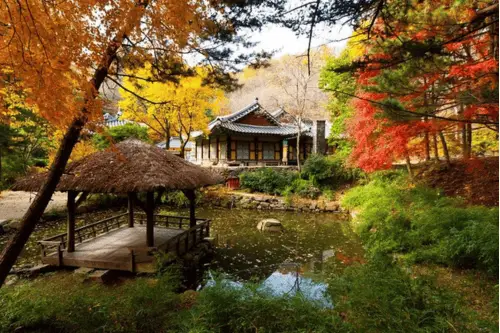
While the Yongin Korean Folk Village is beautiful all year round, Spring (April-May) and Autumn (September-November) are the most popular seasons to visit. The weather is mild and comfortable, and these seasons offer pleasant temperatures, making it ideal for exploring the outdoor attractions and enjoying cultural performances.
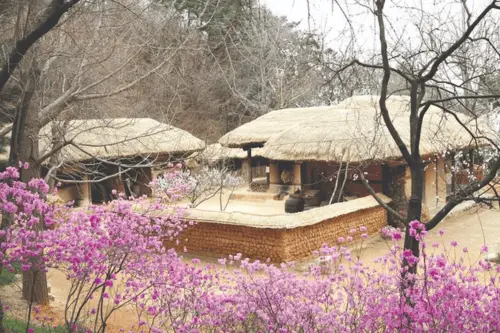
Additionally, during the spring, you can witness beautiful cherry blossoms, forsythia, azalea, and plum flowers in bloom, adding to the scenic charm of the village. Similarly, autumn brings stunning foliage colors, creating a picturesque backdrop for your visit. That said, Summer (June-August) is typically hot and humid, so try to avoid that period. On the other hand, Winter (December-March) is best to enjoy snow-dusted hanok views, but has shorter daylight hours.
Key Takeaways:
- Best Time To Visit: Spring (April-May), Autumn (September-November)
- Why Visit in Spring: Cherry blossom season, mild temperatures
- Why Visit in Autumn: Foliage season: golden gingko trees, crimson maples, and crisp air
- Tip: Don’t plan your itinerary on weekends or holidays to avoid heavy crowds. Stick to weekday mornings for any season.

Who Should Visit The Korean Folk Village?
The Korean Folk Village is ideal for first-time visitors, families, culture-seekers, and even K-drama fans. If you are on a 5-day or weeklong vacation, this village is the best day trip option from Seoul. It is also a must-visit for those tired of skyscrapers and city sights. The best part? You only need to spend 1 to 1.5 hours on the road to reach here. In a nutshell, the Korean Folk Village is ideal for:
- First-time visitors interested in Korean tradition, culture, and history
- Families with children who want an educational and fun activity
- K-drama fans, especially those who’ve watched Moon Embracing the Sun, My Love from the Star, & Dong Yi
- BTS fans (ARMY) eager to visit Run BTS filming locations
- Photographers who find their muse in traditional Korean scenery
- Visitors wanting hands-on cultural experiences
- Travelers seeking day trips from Seoul
Korean Folk Village vs Bukchon Hanok Village: Which One Is Better?

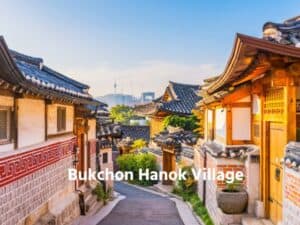
First-time visitors are often in a dilemma over choosing between the Korean Folk Village and Bukchon Hanok Village. While both destinations pay homage to ancient Korea, they offer distinct experiences. First, let’s compare their activities, accessibility, pros, and cons.
| Category | Korean Folk Village | Bukchon Hanok Village |
| Travel Time from Seoul | 60-75 minutes | Located in central Seoul |
| Highlights | 270 restored houses from the Joseon Dynasty, cultural performances, & hands-on workshops | Centuries-old residential houses, art galleries, cafes, & photo zones. |
| Admission Fee | Entry fee costs between $17 and $25. | Entry is free. |
| Best For | Families, culture-seekers, & visitors interested in interactive experiences | First-time visitors, photographers, & slow travelers |
| Historical Immersion | High, with performances and workshops focused on preserving Korean traditions. | Moderate; it is a living neighborhood, not tourist entertainment-focused |
| Accessibility | The Korean Folk Village is located outside of Seoul. Although reachable, the journey takes longer than Bukchon. | Bukchon Hanok Village is centrally located, easily accessible via Line 3 (Anguk Station, Exit 2 or 3). |
✨ IVK’s Take:
Korean Folk Village: Best For A Full Cultural Experience
The iconic Korean Folk Village is centered on cultural immersion and introducing visitors to Korean tradition and culture. It strives to preserve the fading value of folk culture through outdoor exhibitions, cultural performances, and hands-on workshops. A trip here is not a leisurely stroll, but a chance to engage in immersive activities. As such, the Korean Folk Village comes off as more touristy than Bukchon Hanok Village.
Bukchon Hanok Village: Best For Quick Sightseeing
A stark contrast to the Korean Folk Village, the Bukchon Hanok Village is a living neighborhood, featuring authentic, traditional houses, where residents still live. The atmosphere here is not created but real, where a visit feels more like a neighborhood stroll. Bukchon invites travelers to slow down and explore in a mindful, unhurried pace. Hands-on experiences are limited, but you will still find some calligraphy workshops. It is ideal for those who prefer a quieter environment, want to take postcard photos, or seek a 2-3 hour itinerary.
Ultimately, choose the Korean Folk Village if you want an immersive experience and a retreat from Seoul. Or, opt for the Bukchon Hanok Village for walking and more authentic local vibes.
Visit Everland Nearby

- Address: 199 Everland-ro, Yongin-si, Gyeonggi-do
- Open hours: 10:00 – 22:00 daily
- Phone: +82 31-320-5000
- Entrance ticket: 68,000 KRW ($44.4) for adults, 58,000 KRW ($37.87) for children
- Note: The Everland ticket price varies depending on the day. Please see their website for the current price.
After exploring the traditional charm of the Korean Folk Village, you can head over to Everland, Korea’s largest theme park, located just a short drive away. It’s a perfect contrast to the peaceful village, offering thrilling roller coasters, vibrant parades, animal encounters at the zoo, and seasonal festivals that light up the park all year round. Compare Everland ticket options and shuttles to save time and money.
Pair Your Trip With Suwon Hwaseong Fortress
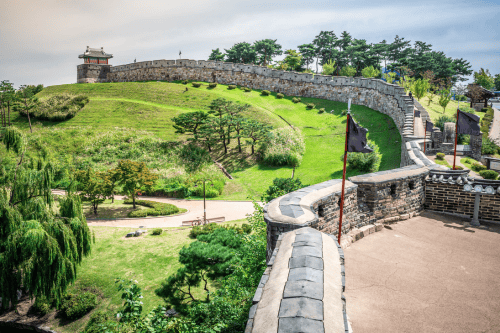
- Address: 320-2 Yeonghwa-dong, Jangan-gu, Suwon-si, Gyeonggi-do, South Korea
- Opening Hours: 24 hours
- Entrance Fee: Free Entry; Haenggung Palace and Hwaryeongjeo require tickets: Adults: 1,500-2,000 KRW ($0.98-$1.31), Children: 1,000 KRW ($0.65)
- Phone: +82 31-290-3600
Suwon Hwaseong Fortress and the Korean Folk Village are a classic pairing, ideal for culture-seekers and visitors interested in the Joseon Dynasty. Located only a short distance from the village, this historic fortress, covering over 6 kilometers, was built between 1794 and 1796 at the order of King Jeongjo. The walls are a military construction masterpiece, incorporating various groundbreaking scientific technologies. Visit the Korean Folk Village in the morning, then spend the afternoon walking around the fortress. Compare Suwon Hwaseong Fortress tours and find the best Korean Folk Village and Suwon combo.
Some useful tips for visiting the Yongin Korean Folk Village
- Allow plenty of time to explore the village. There is much to see and do, so you don’t want to feel rushed.
- Outside food and drinks are allowed, so this is an excellent location for a picnic.
- Wear comfortable shoes, as there is a lot of walking to do.
- Get a map of the directions at the entrance.
- Rental strollers, wheelchairs, and audio guides are provided at the entry.
- Pets are not allowed.
- Bikes, scooters, skateboards, and drones are not permitted.
Finally, in a world filled with fast-paced living and rapid technological advancements, the Korean Folk Village offers a rare opportunity to slow down, reconnect with the past, and appreciate the beauty of simpler times. Whether you’re a history buff, a culture enthusiast, or simply looking for a unique travel experience, the Korean Folk Village promises to captivate and inspire. So, why not step back and embark on a journey through the heart of Korean heritage?
FAQs
You may also like:
- 12 Famous Korean Folk Villages – A Journey Through Time
- Everland Theme Park 에버랜드: Your Ultimate Adventure Awaits
- How To Get To Everland From Seoul
- Suwon Hwaseong Fortress 수원화성: Explore the Timeless Grandeur
Compare Before You Book
Live prices and expert picks for the tours and tickets mentioned in this guide.
 Compare 111 options
DMZ Day Tours from Seoul
 Compare 38 options
Incheon Airport Transfers
 Compare 41 options
Everland Tickets
 Compare 109 options
Nami Island Tickets & Tours
 Compare 27 options
Lotte World Tickets
 Compare 38 options
Busan Day Tours
 Compare 17 options
N Seoul Tower Tickets
 Compare 58 options