

Last updated:
Looking for hidden places in Seoul beyond the usual tourist attractions? The city has plenty of quieter hanok spaces, creative alleyways, unusual museums, and scenic walking spots that offer a different way to explore the Korean capital. From the vintage rides at Yongma Land to the peaceful Cheongwoon Literature Library and the artist-filled streets of Mullae, these places are worth adding to your Seoul itinerary if you want to discover something beyond the typical sightseeing route.
Read also:
- Top Hidden Places in Seoul You Shouldn't Miss
- Seonyudo Park
- Baeksasil Valley
- Yongma Land Abandoned Theme Park
- Eunpyeong Hanok Village
- Seodaemun Prison History Hall
- Mangusan Mountain
- Chungwoon Literature Library
- Mokin Museum 목인 박물관 목석원
- Cafe Pokpo
- Mullae Art Village
- National Folk Museum Memory Road 국립민속박물관 추억의 거리
- Hwarangdae Railroad Park
- FAQs About Hidden Places in Seoul
Top Hidden Places in Seoul You Shouldn’t Miss
Oil Tank Culture Park
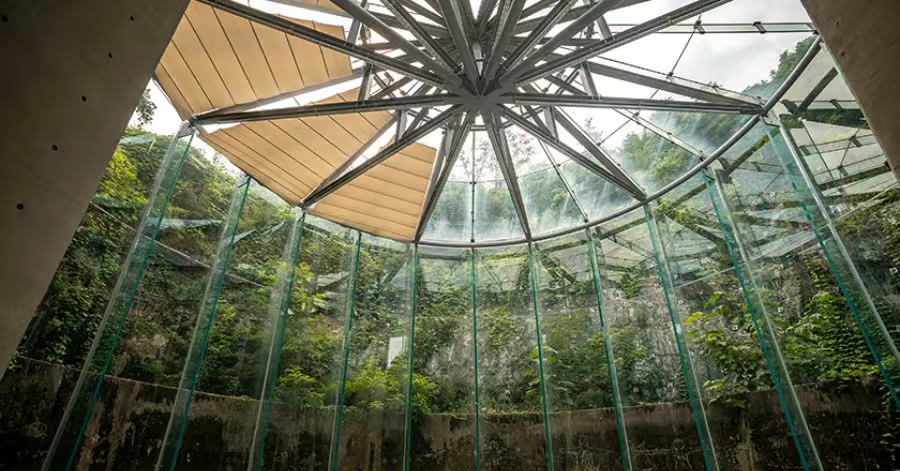
Oil Tank Culture Park is one of Seoul’s more unusual cultural spaces. What was once an industrial oil storage facility has been repurposed into a public cultural complex with exhibition spaces and distinctive structures.
The site’s large tanks and industrial architecture make it particularly interesting for travelers who enjoy photography, contemporary design, and places with a story behind their transformation. Instead of removing all traces of its former purpose, the park incorporates its industrial history into the visitor experience.
- Location: 87 Jeungsan-ro, Mapo-gu, Seoul.
- Getting there: use the Seoul Subway Line 6, Exit 2 or 3 and walk a short distance from the station.
Seonyudo Park
Seonyudo Park is a green retreat on an island in the Han River. The park is particularly interesting because its landscape incorporates elements of a former water treatment facility, combining industrial structures with gardens and walking paths.
Rather than offering a conventional manicured garden, Seonyudo features a distinctive mix of concrete structures, greenery, and open spaces. It’s a good destination for travelers who enjoy urban landscapes and photography. You can spend time exploring the paths, observing the plants, and enjoying views of the river.
- Location: 343 Seonyu-ro, Yeongdeungpo District, Seoul
- Getting there: taking Seoul Subway Line 9 to Seonyudo Station, Exit 2, and walking about 10 minutes across the pedestrian Seonyu Bridge
Baeksasil Valley
Baeksasil Valley is a natural retreat in the Buam-dong area, offering a greener and quieter side of Seoul.
The valley is known for its woodland setting, streams, and traces of historical structures. Walking here feels different from exploring the city’s dense commercial neighborhoods, making it a useful option for travelers who want to spend time outdoors without arranging a day trip beyond Seoul.
- Location: 115번지 Buam-dong, Jongno District, Seoul
- Getting there: ake Subway Line 3 to Gyeongbokgung Station and leave via Exit 3. Board local or city bus No. 1020, 1711, 7016, 7018, 7022, or 7212. Ride the bus for about 10–15 minutes and get off at Buam-dong Community Service Center.
Yongma Land Abandoned Theme Park

If you’re a K-pop fan, you probably have spotted the iconic carousel of Yongma Land in some MVs such as Crayon Pop’s Bar Bar Bar, BEAST’s Ribbon, and TWICE’s LIKE OOH-AHH… But there are more exciting things to do in this park than that.
Yongma Land is an abandoned theme park, closed since 2011. This is a popular photo destination among Korean youth. Take a chance to take Instagram-worthy pictures with the spinning disco ride, a disassembled roller coaster, “flying” automobiles, a Viking ship, and even an abandoned shopping cart. You will get excellent and unique photos here. Plus, you can even pay to have the park’s iconic feature, the carousel, lit up and running for better shots and videos.
Although this place is abandoned, it still has functional amenities like restrooms, vending machines, stores, and more. Tickets are available at the ticket counter near the park’s entrance for KRW10,000 (USD9.07) for adults and KRW5,000 (USD4.31) for children.
- Address: 118 Mangu-ro 70-gil, Jungnang-gu, Seoul
- Open hours: 10:00 – 18:00 daily
- Phone: +8224365800
- How to get there: Take the subway line 7 to go to Mangu Station, then take exit one and walk for about 15 minutes. The road is confusing, so you can take a taxi from Mangu Station if you do not like walking.
Eunpyeong Hanok Village

Everyone thinks about Bukchon Hanok Village when they think of Hanok House. Still, few people realize that Seoul has another Hanok village that is equally lovely but less crowded: Eunpyeong Hanok Village.
The village was built at the base of Bukhansan Mountain in December 2014. Instead of restoring hanok houses like other villages, this place was created completely new. There are many attractions around this area, and you can spend a whole day exploring.
Jingwansa Temple is one of the must-see attractions just on the outskirts of the Hanok Village and one of Seoul’s major temples. With temple-stay experiences, temple cuisine, and traditional culture experience rooms, the temple is a perfect site for anyone interested in learning about Buddhist culture.
One of the unique features of Eunpyeong Hanok Village is the teahouse and restaurant with a panoramic view of the village. Some restaurants and cafes provide floor-to-ceiling transparent glass doors with a great view of the tiled roofs hidden among the Bukhansan mountains and forests. The must-visit cafes with the best view over the village are 1in 1jian (1인 1잔) and Starbucks The Bukhasan.
- Address: 127-25 Jingwan-dong, Eunpyeong-gu, Seoul
- Open 24/7, free entrance
- How to get there: From Seoul Station, take the bus 701 at the bus stop number 02006 (in front of exit 9-1) and disembark at the bus stop number 12437 (Hanago.Samcheonsa.Jinwansa Temple Entrance). It takes around 45 – 50 minutes.


Seodaemun Prison History Hall

A prison might not be on your list of must-visit places in Seoul. Still, The Seodaemun Prison History Hall is a historical and educational museum that sheds light on Korea’s struggle for independence from Japanese colonial rule. It was constructed in 1907 and opened on October 21, 1908, under Gyeongseong Gamok. During the Japanese colonial period, the prison was used to imprison Korean independence activists and other political prisoners. You can explore the prison cells, courtyards, and various structures within the complex, gaining a deeper understanding of what life was like for those imprisoned here.
Additionally, especially in the fall, this is a very lovely location for pictures. The scenery is reminiscent of Europe thanks to the red bricks used in the buildings and the surrounding color of the maple leaves.
- Address: 251 Tongil-ro, Seodaemun-gu, Seoul
- Open hours: 9:30 – 18:00 daily | Closed on Mondays
- Phone: +8223639750
- Entrance fee: 3,000 Won (2.3 USD) for adults, 1,500 Won (1.1 USD) for teenagers, 1,000 Won (0.7 USD) for children
- Website: sphh.sscmc.or.kr


Mangusan Mountain

Known for its lush forests, pristine streams, and stunning waterfalls, Mangusan Mountain is a paradise for nature enthusiasts and hikers. Its diverse range of hiking trails caters to all experience levels, offering opportunities to explore the local wildlife and flora.
The park not only boasts its natural and cultural attractions but also holds some hidden treasures. Among these is the Sin Gyeong-jin Sindobi, a cultural masterpiece designated as Seoul Tangible Cultural Property No. 95. This monument pays homage to Sin Gyeong-jin, a respected official scholar during the Joseon dynasty, adding a historical dimension to the park’s appeal.
At the mountain’s peak, you are rewarded with awe-inspiring panoramic views, especially striking during the vibrant colors of autumn. Mangusan Mountain welcomes picnickers, campers, and anyone seeking a tranquil escape, so if you need a peaceful getaway, head to this mountain.
- Address: 산57-1 Mangu-dong, Jungnang-gu, Seoul
Chungwoon Literature Library

This is a hidden gem, ideal for escaping the stresses of everyday life. Chungwoon Literature Library is a Hanok library located a few meters above the foot of Inwangsan Mountain. The first level, like any other library, contains general circulating book stacks and a juvenile collection. The second floor, however, is where the library’s hanok-style features shine, with its reading and seminar spaces. You can borrow the book from the first-floor reference desk and then take it to the second floor to read.
There are two types of hanok: Bonchae and Nujeong. Through the window of Nujeong, you can see a little pond with a tiered waterfall. This is the most Instagrammable site at Chungwoon Literature Library, with the waterfall as the perfect backdrop. Reading while sitting in Nujeong amid the aroma of flowers, the sound of the breeze, and the music of birds is highly therapeutic. In addition, there are numerous famous hiking trails, a park, and a literature museum behind the hanok. So remember to take a look after spending time reading.
- Address: 40 Jahamun-ro 36-gil, Cheongunhyoja-dong, Jongno-gu, Seoul
- Open hours: 10:00 – 21:00 Tue – Fri | 10:00 – 19:00 on weekends | closed on Mondays
- Free Entrance
- Phone: +827046804032
- Website: (Korean only) lib.jongno.go.kr
Mokin Museum 목인 박물관 목석원

Even if you have been to Korea, you probably have not heard of the Mokin Museum. This place is a must-visit for those fans of wooden art and its history. Mokin Museum is a museum specializing in traditional wooden carvings and woodwork. They’ve got seven fantastic exhibition halls, each filled with intriguing wooden figures from worldwide. “Mokin” refers to traditional wooden sculptures carved in the shapes of human figures and animals.
The museum has an impressive collection of around 12,000 wooden folk sculptures, some used to decorate funeral carriages and temples. These artworks span from the Joseon dynasty to modern times. Moreover, they’ve set up an outdoor exhibition hall where these sculptures blend in with nature. It’s a beautiful fusion of art and the great outdoors. Witness the harmony of culture surrounded by Mt. Inwang and Bukhan and experience a time of healing.
- Address: 46-1 Changuimun-ro 5-gil, Jongno-gu, Seoul
- Open hours: 10:30 – 18:00 daily | closed on Mondays
- Entrance fee: Adults 12,000 won (9.2 USD) | Teenagers 7,000 won (5.4 USD) | Children 5,000 won (3.8 USD)
- Website: www.mokinmuseum.com
Cafe Pokpo

You won’t be able to find a more refreshing getaway amid Seoul’s concrete jungle. Cafe Pokpo, often known as “Cafe Waterfall,” opened its doors in late 2022 and has since become a popular destination for coffee lovers in the Seodaemun neighborhood. Thanks to its excellent location and stunning view, the cafe deserves all the recognition.
Cafe Pokpo is strategically located on the banks of Hongjecheon, the Han River’s first tributary. The cafe is built on higher ground along the Seodaemun walking trails, right before the Hongjecheon Waterfall. While the waterfall is artificial, its ambiance is completely calming and peaceful. There are plenty of outside seats at Cafe Pokpo so you can take in the breathtaking views and the captivating beauty of the waterfall up close.
They serve beverages and coffee ranging from latte, caramel macchiato, and mocha. The prices range from 3,000 to 5,000 won (2.3 – 3.8 USD) on average, which is pretty reasonable.
- Address: 262-29 Yeonhui-ro, Seodaemun-gu, Seoul
- Open hours: 11:00 – 22:00 daily | closed on Mondays
- How to get there: From Hongje Station, take bus number 7738 and get off at stop number 13200. You will spot a bridge there, cross the bridge, and keep walking southwest until you spot Cafe Pokpo. From Hongik University station, take the bus 110A, then get off at stop number 13159. You will see the stream from the stop, just walking toward the stream.
Mullae Art Village

Mullae Art Village is a good option if you think Ihwa Art Village is too crowded. After the workers in this once-bustling industry left, young artists and small ironworkers took over, transforming the region into the art village it is today.
Losing yourself in the labyrinth streets is the ideal approach to discovering Mullae Art Village. You might discover street art or stumble upon hidden bars if you venture a short distance down narrow alleys. Don’t be afraid to explore. Stop by some galleries if you’re genuinely into art; there are numerous galleries.
And, of course, no famous location in Seoul would be complete without trendy cafes and restaurants, which are plenty in this area. Some popular instances include Old Mullae, Rust Bakery, Beervana, and Hotel 707.
- Address: 54-37 Mullae-dong 3(sam)-ga, Yeongdeungpo-gu, Seoul
- Phone: +82226328625
National Folk Museum Memory Road 국립민속박물관 추억의 거리

This is truly a hidden place in Seoul that not many people know. If you’ve ever watched vintage Korean films and want to see those scenes in person, this is the place to go. This street recreates scenes common in Korea during the 1960s and 1980s. In addition to vintage cafes, barbershops, and comic book stores, you will also find classic wooden power poles and briquette storage.
There are a lot of fun things to do in the street. In the cafe, you can request that the DJ play music from the 1970s and 80s and enjoy the vintage ambiance. In the photo studio, you can check out the wedding, graduation, and family photos from the 1970s; you can even put on uniforms and shoot photos based on that concept. Furthermore, you can engage in traditional games like rubber rope leaping and hopscotch.
- Address: 161 Sajik-ro, Jongno-gu, Seoul
- Website: National Folk Museum of Korea – 영어 > Exhibitions > Open-air Exhibition (nfm.go.kr)
Hwarangdae Railroad Park

Hwarangdae Railroad Park is a hidden gem in Seoul that offers a unique blend of history, nature, and recreation. Built on the site of a former railroad, this charming park provides an excellent setting for outdoor activities.
There is a museum dedicated to trains in South Korea inside the station’s building, and one of the old trains has been renovated into a small library for children. Also, you’ll find gardens, including various types of flowers and plants that change with the seasons, adding to the park’s charm.
You can relax, picnic, or stroll and enjoy the green surroundings. Hwarangdae Railroad Park showcases the beauty of each season, but most beautiful with cherry blossoms in spring and colorful foliage in autumn.
- Address: 29-4 Gongneung 2-dong Nowon-gu, Seoul
- Open hours: 24/7
FAQs About Hidden Places in Seoul
Compare Before You Book
Live prices and expert picks for the tours and tickets mentioned in this guide.
 Compare 111 options
DMZ Day Tours from Seoul
 Compare 38 options
Incheon Airport Transfers
 Compare 41 options
Everland Tickets
 Compare 109 options
Nami Island Tickets & Tours
 Compare 27 options
Lotte World Tickets
 Compare 38 options
Busan Day Tours
 Compare 17 options
N Seoul Tower Tickets
 Compare 58 options